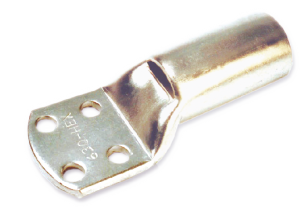
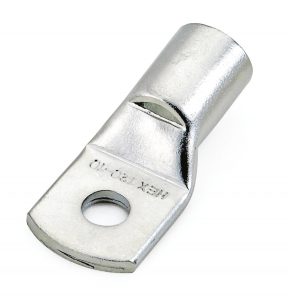
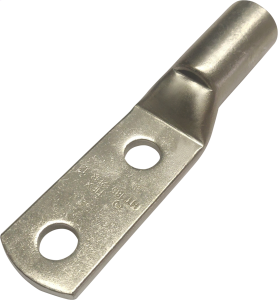
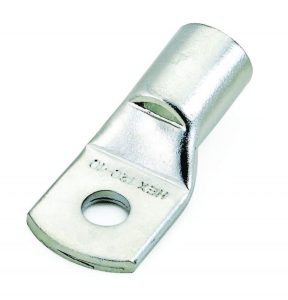
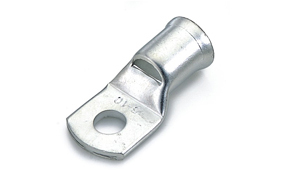
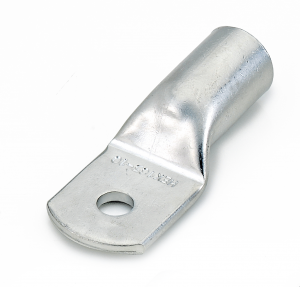
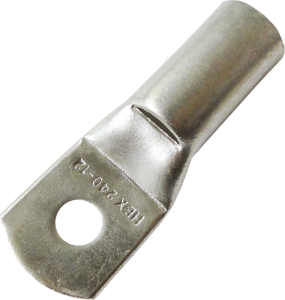
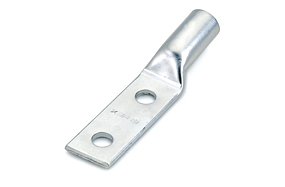
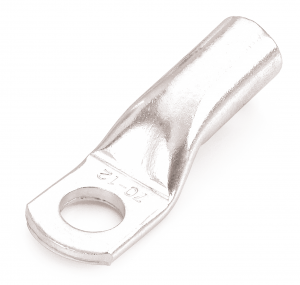
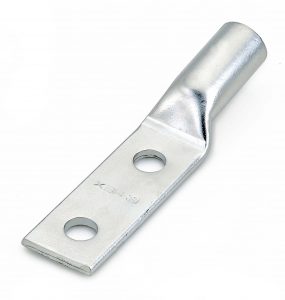
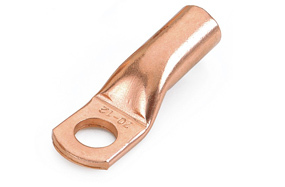
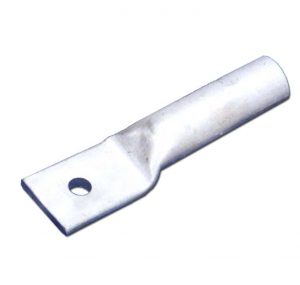
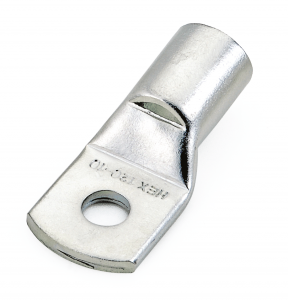
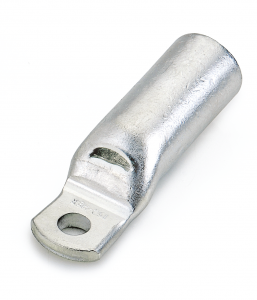
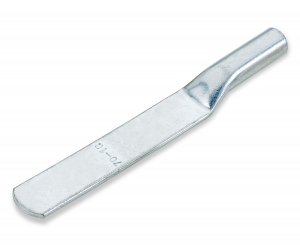
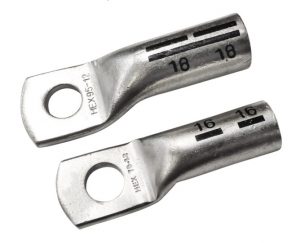
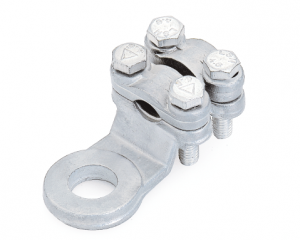
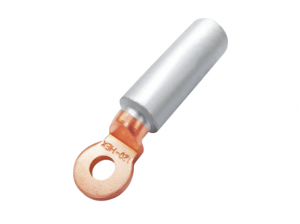
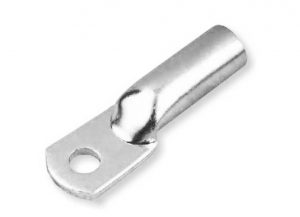
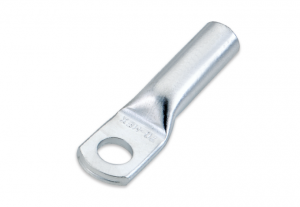
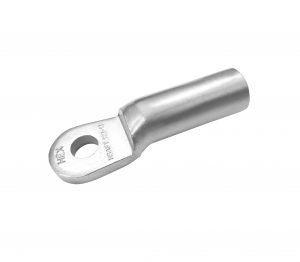
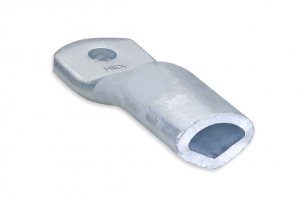
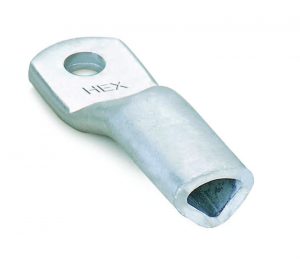
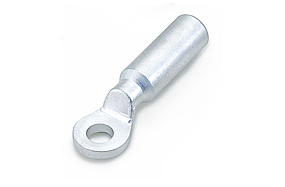
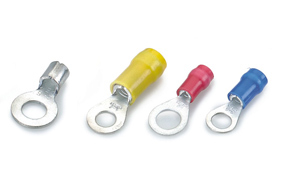
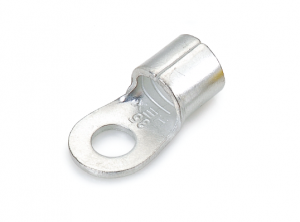
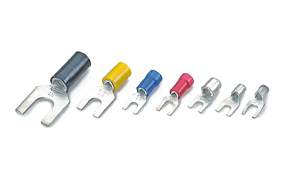
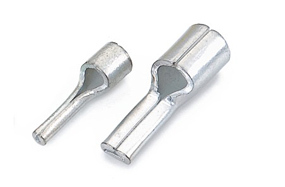
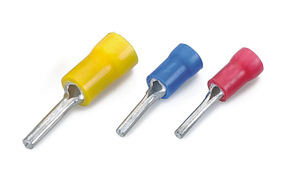
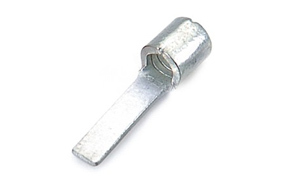
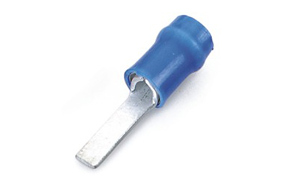
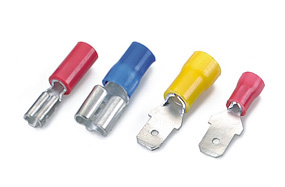
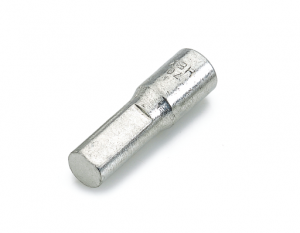
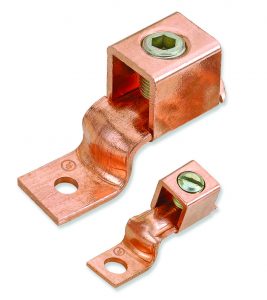
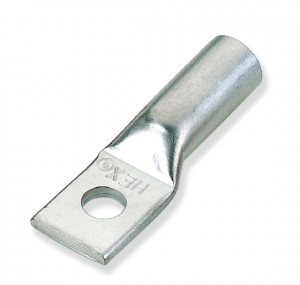
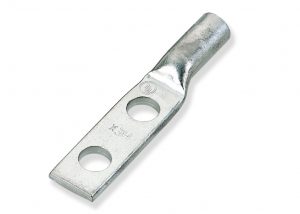
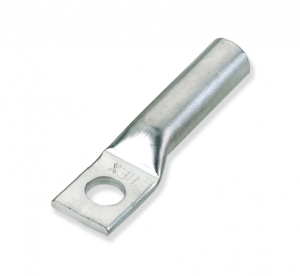
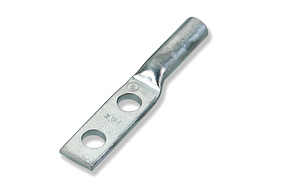
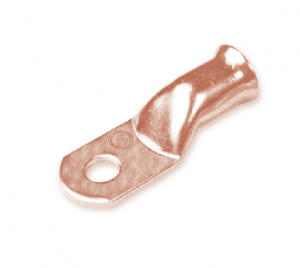
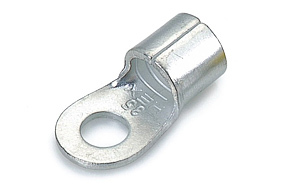
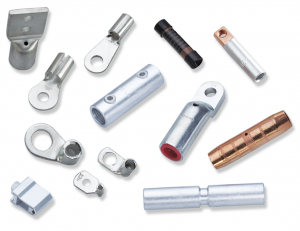
Where a conventional ring or tongue lug requires a bolted palm connection, pin type lugs deliver termination through direct barrel insertion — making them the standard choice wherever conductors connect to socket-type terminals, plug-in breakers, and DIN rail terminal blocks.
HEX Worldwide manufactures copper pin type cable lugs for a full range of panel wiring, switchgear, and industrial control applications. Our pin lugs are precision-machined from high-conductivity electrolytic copper and are available in insulated and uninsulated configurations across conductor sizes from 0.5 mm² to 50 mm².
What Is a Pin Type Lug?
A pin type lug (also called a pin terminal or ferrule lug) consists of a cylindrical copper pin barrel — crimped onto the conductor on one end — and a solid or hollow pin on the other, designed for direct insertion into a socket-type terminal or connector block. Unlike ring lugs, there is no palm or bolt hole; the connection is made axially, which makes pin lugs the correct termination for any equipment where the terminal accepts a pin rather than a bolted flat conductor.
The pin geometry also delivers a smaller termination footprint than a ring lug for the same conductor size, which is critical in dense panel wiring environments where space is at a premium.
Moulded Case Circuit Breakers (MCCBs) MCCBs from 16 A to 630 A commonly feature socket-type terminal blocks where pin type lugs or bare conductors are inserted and clamped. Pin lugs provide a cleaner, more reliable termination than inserting bare stranded conductors directly, particularly at the higher end of the current range where conductor cross-sections are large and strand consolidation is important.
Air Circuit Breakers (ACBs) ACBs in the 630 A – 6300 A range use pin-type lugs for auxiliary circuit connections, control wiring, and trip unit wiring within the breaker body.
DIN Rail Terminal Blocks The overwhelming majority of DIN rail terminal strips (Phoenix Contact, Weidmüller, ABB, Schneider, and equivalents) are designed for pin lug or bare wire insertion. Insulated bootlace ferrules are considered best practice for all stranded conductor terminations into spring-clamp and screw-cage terminals.
PLC and Instrumentation Panels Control wiring in PLC cabinets, SCADA panels, and instrumentation junction boxes uses fine-stranded Class 5 conductors that require bootlace ferrules or insulated pin lugs at every terminal connection.
Motor Control Centres (MCCs) Control circuit wiring within MCC compartments — contactor coils, auxiliary contacts, overload relay wiring, and interlocking circuits — is predominantly pin lug territory.
VFD & Soft Starter Control Wiring Variable frequency drive and soft starter control terminal blocks are designed for pin terminations. Correct pin lug selection ensures reliable signal and control connections without intermittent failures caused by strand loosening.
Pin Type Lugs vs Ring Lugs — Key Differences
Parameter
Pin Type Lugs
Ring / Tongue Lugs
Connection method
Axial pin insertion into socket terminal
Bolted flat palm onto busbar or terminal stud
Terminal type required
Socket / clamp / plug-in terminal block
Threaded stud, bolt, or busbar
Typical applications
Switchgear, MCCBs, control panels, terminal strips
Power cables, transformer connections, busbar connections
Conductor size range
0.5 mm² – 50 mm²
1.5 mm² – 630 mm²
Insulation available
Yes (colour-coded IEC sleeve)
No (use heat-shrink sleeving)
Visual identification
IEC colour code by size
None (size stamped on barrel)
Vibration resistance
High (positive insertion into socket)
Dependent on bolt torque
Why Specify HEX Pin Type Lugs
Full Range Under One Roof Uninsulated, insulated, and bootlace ferrule variants across all standard conductor sizes — eliminating the need to source from multiple suppliers for a single panel build.
Consistent Dimensional Tolerances Pin diameter and length tolerances are held tightly in production to ensure positive engagement in all standard terminal block profiles. Oversized pins that bind in terminal sockets, or undersized pins that have insufficient contact area, are a direct result of poor dimensional control in manufacturing.
IEC Colour Compliance Our insulated pin lugs follow the IEC 60947 colour coding standard as shipped — no need for the installer to add separate colour-coded sleeves, which reduces installation time and eliminates identification errors.
Compatible Tooling HEX ratchet crimping tools with dedicated pin lug die sets are available to complete the termination system. The die geometry is matched to our lug barrel dimensions for reliable, repeatable crimps. View Crimping Tools →
Frequently Asked Questions
What is the difference between a pin type lug and a bootlace ferrule?
A pin type lug is a solid copper termination device — it has a barrel that is crimped onto the conductor, plus a machined or formed pin that inserts into the terminal. A bootlace ferrule (end sleeve) is a thin-walled copper tube that consolidates the strands of a flexible conductor into a pin-like profile without adding significant mechanical structure. Bootlace ferrules are generally used for finer conductor cross-sections (0.5 mm² – 10 mm²) in control wiring. For power conductors and larger cross-sections (10 mm² and above), solid pin type lugs are preferred.
Do pin type lugs require a special crimping tool?
Yes. Pin type lugs and bootlace ferrules require a crimping tool with a die profile designed for the cylindrical barrel geometry — typically a quad-indent or six-indent die. Standard hexagonal or oval dies designed for ring lugs are not suitable and will produce an incorrectly crimped joint. HEX supplies dedicated pin lug crimping tools and die sets for our full range.
Are insulated pin lugs reusable after crimping?
No. Once crimped, both the copper barrel and the insulating sleeve are permanently deformed. Attempting to remove and re-use a crimped pin lug risks conductor damage and joint failure. Always use a new lug for a new termination.
What conductor class is suitable for pin type lugs?
Pin type lugs can be used with Class 2 (stranded, non-flexible) and Class 5 (flexible) conductors. For Class 5 and Class 6 flexible conductors, the bell-mouth or open-entry barrel variant is recommended, or use bootlace ferrules. Do not insert bare Class 6 conductors directly into terminal blocks without ferrulisation — individual strands will work loose over time due to vibration and thermal cycling.
Can HEX supply insulated pin lugs with custom colours for project identification?
For large project volumes, we can discuss custom colour coding on insulated pin lugs outside the standard IEC range. Contact our sales team with your specification and quantities.